


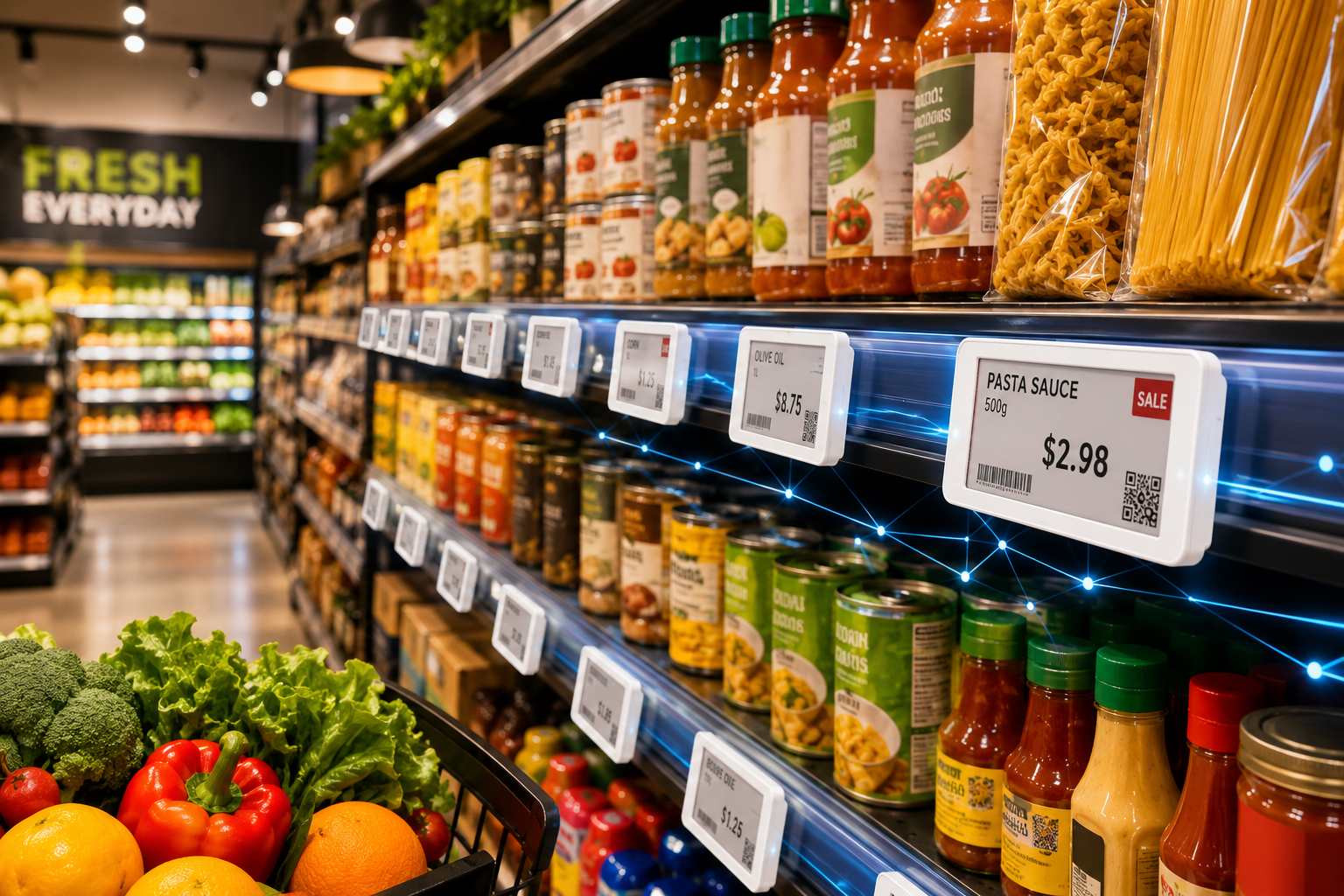
Electronic Shelf Tags for Grocery Stores: The Ultimate Guide to Smarter Pricing
If you run a busy grocery store, you already know the nightmare: thousands of products, weekly promotional updates, and price tags that constantly need reprinting. A single missed paper tag can mean confused customers, billing mismatches, and wasted staff hours.
That’s exactly why modern supermarkets are ditching paper labels.
With Electronic Shelf Tags for Grocery Stores, pricing your store stops being a manual chore and becomes a fast, automated system. Here is how upgrading your shelf management with Saipur can transform your retail business.
Why Paper Price Tags Are Hurting Your Profits
Changing prices by hand isn’t just slow—it’s expensive. Store employee’s waste hours printing sheets of stickers, finding the right aisle, and swapping tags one by one.
The real cost of traditional paper tags:
- Human Errors: A price updated on the billing register but forgotten on the shelf leads to uncomfortable disputes at checkout.
- Wasted Labor Hours: Your staff spends time swapping paper instead of helping customers or restocking inventory.
- Paper & Ink Expenses: Continuous reprinting drains money and generates unnecessary waste.
How Saipur Electronic Shelf Tags Change the Game
Digital pricing isn’t just about looking tech-savvy; it’s about making your everyday store operations seamless. Saipur Electronic Shelf Labels connect directly to your point-of-sale (POS) system, giving you complete control over your retail display.
| Feature | Paper Price Tags | Saipur Electronic Shelf Tags |
| Price Update Speed | Hours or days | Instant (A matter of seconds) |
| Pricing Accuracy | High chance of human error | 100% POS Sync (Zero mismatches) |
| Labor Requirement | High manual work | Fully automated |
| Store Appearance | Cluttered, peeling paper | Clean, high-tech, uniform look |
Key Benefits of Upgrading to Digital Pricing
1. Real-Time Dynamic Pricing
Got a seasonal sale? Want to offer evening discounts on fresh produce before it spoils? With digital labels, you can change prices across your entire store in a few clicks—no physical effort required.
2. Clear & Rich Product Information
These aren’t just digital numbers. Saipur smart tags can display:
- Product names & unit prices
- Promotional discount badges
- QR codes for customer loyalty perks
- Inventory barcodes to help staff restock faster
3. Sustainability Meets Professionalism
Ditching paper labels reduces waste, aligning your store with modern eco-friendly business practices while giving your aisles a crisp, premium look.
Perfect for More Than Just Groceries
While supermarkets and convenience stores rely heavily on fast price updates, Saipur Electronic Shelf Technology works seamlessly across various retail sectors:
- Electronics & Gadget Stores (where prices fluctuate rapidly)
- Pharmacies & Cosmetic Shops (for clean display of sensitive product info)
- Household & Hardware Outlets (to easily manage massive inventories)
Ready to Modernize Your Retail Store?
Pricing management doesn’t have to be a daily headache. Saipur helps grocery stores and retail chains streamline operations, eliminate billing errors, and deliver a better shopping experience.
Contact the Saipur team today to schedule a demo and see how digital shelf tags can upgrade your business.
Frequently Asked Questions (FAQs)
Q1. How do electronic shelf tags communicate with the store billing system?
Saipur digital tags connect wirelessly to your central POS system. When you update a price in your register software, the electronic tag on the shelf updates automatically in real time.
Q2. Are digital shelf labels durable enough for refrigerated sections?
Yes! Specialized electronic shelf tags are built to withstand low temperatures and humidity, making them ideal for dairy, frozen foods, and produce displays.
Q3. Do electronic price tags require frequent battery changes?
Not at all. Digital shelf labels use e-paper technology (similar to e-readers), consuming power only when a display changes. Most batteries last between 3 to 5 years depending on usage.

