

Architectural Visuals with Impact: A Practical Guide to Transparent LED Displays
Large glass facades and floor-to-ceiling store windows define modern commercial buildings. While these architectural designs maximize natural light and create an open atmosphere, standard digital signage covers up the glass with heavy metal frames and solid backings. A transparent LED display solves this issue by using a open-grid layout, allowing businesses to run bright, high-impact video content without blocking natural daylight or obstructing interior views.
At Saipur, we supply and install specialized display systems built specifically for glass integration. Whether you are upgrading a corporate building facade or redesigning a retail storefront window, choosing the right screen hardware keeps indoor spaces bright while creating an active promotional surface facing foot traffic.
How See-Through LED Screen Technology Works
Standard LED walls rely on solid circuit boards that completely block light. In contrast, a see through LED screen uses slim horizontal LED strips mounted on a lightweight aluminium frame. The gaps between these strips allow ambient daylight and interior lighting to pass directly through the assembly.
When the display runs visual content, the high-intensity diodes project clear graphics that appear to float on the glass surface. When the screen is idle or displaying dark colours, the glass behind it remains visibly open.
- Preserved Daylight: Allows natural sunlight to reach interior spaces, helping maintain open sightlines and reducing daylight reliance on artificial lighting.
- Non-Disruptive Mounting: Panels mount directly behind existing glass windows, eliminating the need for structural alterations to building exteriors.
- Low Wind Load: For elevated exterior setups, the open frame allows air to pass through, reducing structural wind resistance compared to solid enclosures.
- Efficient Power Usage: Diodes illuminate only where active visual elements appear, which can lower overall energy consumption compared to full-matrix solid displays.
Practical Applications across Commercial Spaces
As an experienced transparent LED screen provider in India, Saipur tailors display configurations to match specific architectural structures and commercial goals.
Retail Store Windows
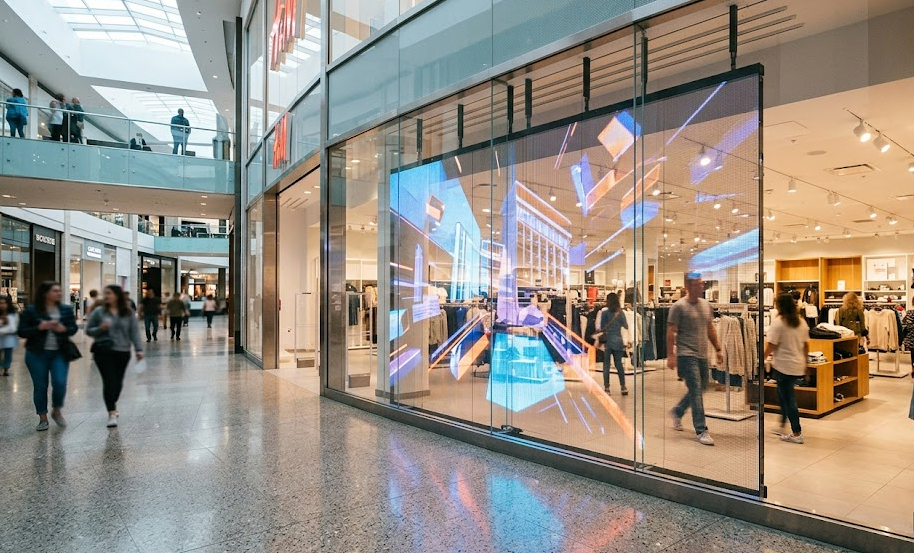
Installing a retail store transparent LED screen transforms glass storefronts into dynamic marketing tools. Outlets can display product launches, seasonal campaigns, and motion graphics without blocking shoppers’ views of the store interior and product displays.
Showrooms and Malls
A showroom transparent LED screen works exceptionally well in automotive dealerships, luxury retail spaces, and consumer electronics outlets where open interiors matter. Similarly, a shopping mall transparent LED display installed across atrium bridges or central walkways delivers clear brand communication across multiple levels without creating heavy visual barriers.
Glass Facades and Building Exteriors
Mounting a glass facade LED display turns corporate headquarters, commercial complexes, and transit hubs into large digital landmarks. These setups create high visual impact from the street while ensuring building occupants continue to enjoy exterior views and natural light.
Indoor vs. Outdoor Transparent LED Displays
Selecting the right setup depends on environmental exposure, installation position, and expected viewing distances.
| Technical Factor | Indoor Transparent LED Screen | Outdoor Transparent LED Screen |
| Common Placements | Retail storefronts, atrium voids, indoor stages, exhibition transparent LED display structures | Exterior curtain walls, glass facades, outdoor skywalks |
| Typical Brightness | 1,000 to 2,500 nits (optimized for ambient indoor light) | 4,500 to 7,000+ nits (engineered to combat direct sunlight) |
| Environmental Protection | Standard open or semi-enclosed cabinet frame | Weather-sealed modules with rated protection against rain and dust |
| Typical Pixel Pitches | Fine pitch (P2.8 to P3.9) for closer viewing | Coarser pitch (P7.8 to P10.4) for long-distance viewing |
Technical Specifications: P3.9 vs. P7.8 Pixel Pitches
Pixel pitch measures the distance in millimeters between individual LED diodes. This measurement directly influences screen resolution, optimal viewing distance, and overall transparency.
P3.9 Transparent LED Screen
A P3.9 transparent LED screen features tighter diode spacing, delivering higher visual resolution and fine detail. This density is well-suited for close-range viewing distances between 3 and 8 meters. It is frequently chosen for retail window displays, indoor showrooms, and custom architectural LED display projects where viewers stand near the glass.
P7.8 Transparent LED Display
A P7.8 transparent LED display utilizes wider diode spacing, which increases overall screen transparency and allows maximum light transfer through the glass. This configuration works well for a large-scale transparent LED video wall installed on elevated corporate facades or multi-story shopping mall atriums viewed from greater distances.
For glass surfaces directly exposed to bright sunlight, choosing a high brightness transparent LED screen ensures graphics stay crisp and visible without getting washed out by glare.
Key Factors Affecting Transparent LED Screen Costs in India
Calculating the transparent LED screen price in India involves reviewing several technical and installation variables:
- Pixel Density: Fine-pitch configurations (such as P2.8 or P3.9) require more LED diodes per square meter than P7.8 screens, which impacts manufacturing cost.
- Brightness Ratings: A high transparency LED screen specified for direct sunlight exposure uses higher-grade diodes and power components compared to standard indoor units.
- Custom Frame Mounting: Specialized hanging structures, customized frame sizes, structural load calculations, and site access requirements influence overall project investment.
- Weatherproofing Seals: Outdoor-rated displays require extra weather sealing, specialized coatings, and thermal management features compared to indoor systems.
Saipur works directly with commercial buyers, architects, and site engineers to evaluate site conditions, pick appropriate pixel pitches, and plan reliable installations aligned with project budgets.
Frequently Asked Questions
Does installing a transparent LED screen reduce indoor natural light?
Because these displays use open-grid frames, a slim transparent LED video wall maintains high light pass-through rates. Natural daylight continues to enter the building, keeping interior spaces well-lit during daytime hours.
How do operators update and manage display content?
Content management systems can be operated locally or remotely. You can schedule promotional videos, adjust display brightness, and push media updates over a local network connection or cloud management portal.
Can an indoor transparent screen handle direct sunlight through window glass?
Indoor units placed behind exterior-facing windows require adequate nit brightness to remain visible against exterior sunlight. Matching the nit rating to your window’s direction ensures clear visibility throughout the day.
How do outdoor glass facade displays handle extreme weather conditions?
Outdoor-rated modules are built using weather-sealed components, UV-resistant materials, and heat-dissipating aluminium housings designed to handle heavy rainfall, dust, and hot summers.
Follow us on: Instagram

